
Dental implants
A dental implant replaces a missing tooth root. A crown, bridge, or full-arch restoration is then attached to it. Suitability depends on an assessment of your mouth and general health.
Implant explorer
See how an implant is put together
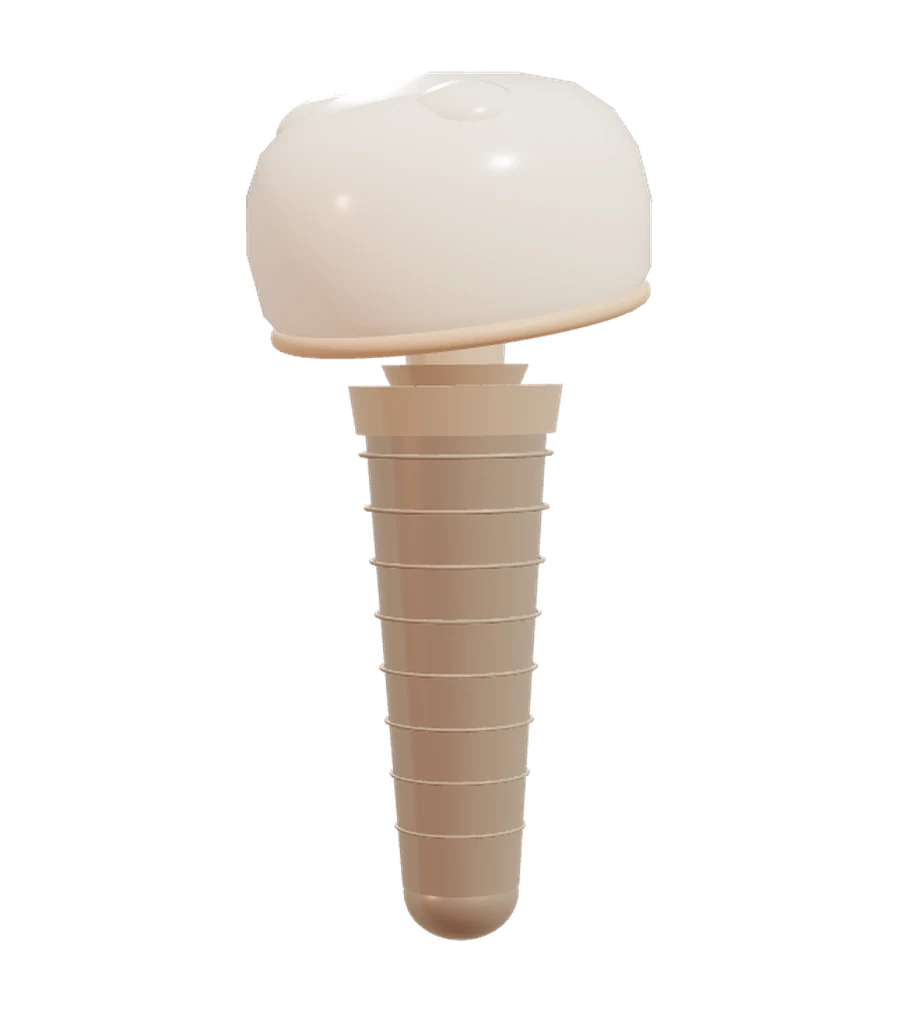
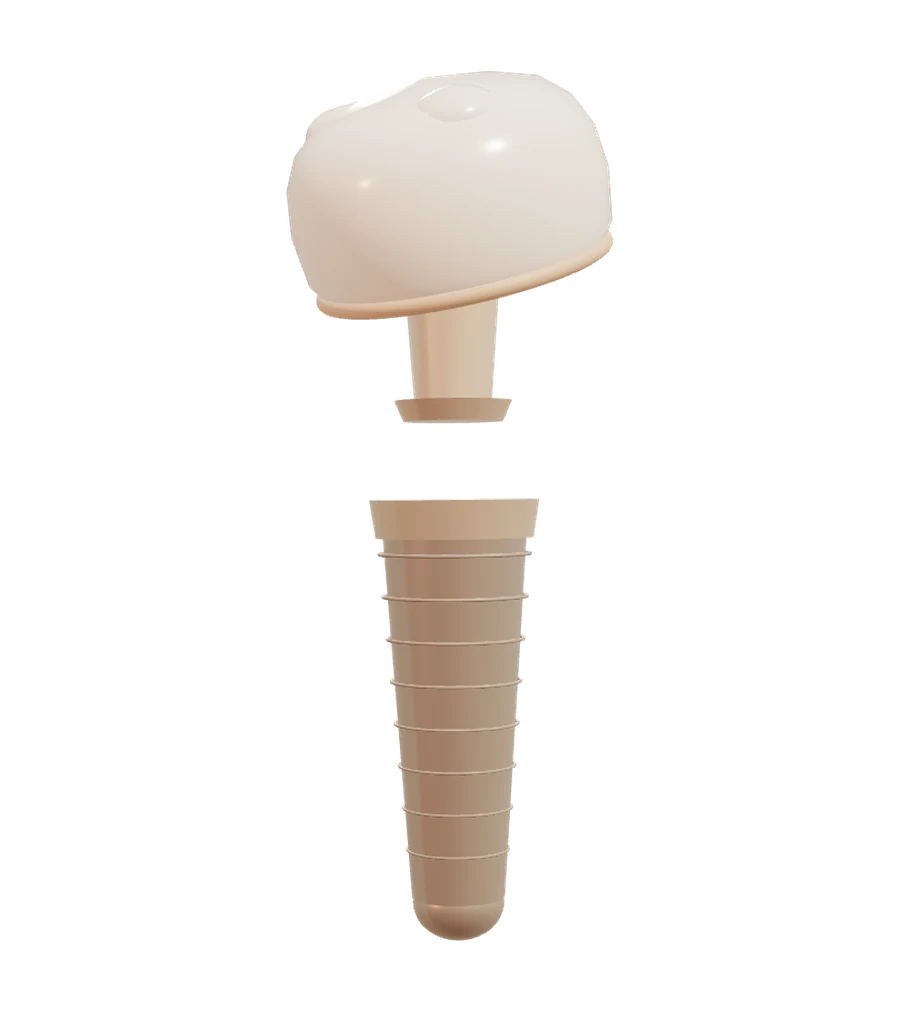
A dental implant is not a single piece. The fixture sits in the jaw, the connector joins it to the crown, and the crown is the replacement tooth you see.
-
Crown. The visible replacement tooth, shaped to match its neighbours.
-
Connector. Also called an abutment. It joins the implant to the crown.
-
Implant. The fixture placed in the jawbone, where it acts as an anchor.
Assembled view. Illustration only, not to scale.
What it addresses
What dental implants address
Dental implants are used to replace missing teeth. The implant is a small fixture placed in the jawbone, where it acts as an anchor for the replacement tooth.
Implants can support a single crown, a bridge, or a restoration that replaces many teeth. Which of these applies depends on how many teeth are missing, the condition of the gums and bone, and the bite.
One missing tooth
One implant can support one crown when the teeth either side are healthy and do not need to be prepared for a bridge.
Several missing teeth
Implants can support a bridge. In some cases this avoids preparing healthy neighbouring teeth, which a conventional bridge requires.
Full-arch care
Where many or all teeth are missing, implants can support a fixed or removable full-arch restoration. This is a larger plan, with more appointments and a longer assessment.
Assessment
What assessment involves
Assessment looks at the space, the gums, the bone, the bite, and your general health. Some medical conditions and medications affect healing and are discussed before any plan is made.
Smoking and conditions such as diabetes can affect healing. The clinic will discuss what this means for you without judgement, and will explain if another option is more appropriate.
- Medical history, medication, and anything that affects healing
- Gum health and the amount of bone available
- The bite and the condition of neighbouring teeth
- Imaging needed to plan the position of an implant
Options
Options that may be considered
Missing teeth can be replaced in different ways. An implant is one option. A bridge or a removable denture may also be considered. Each has trade-offs in cost, appointments, and day-to-day care.
Where there is not enough bone, additional treatment such as grafting may be discussed. If an implant is not appropriate, the reasons will be explained.
Implant-supported restoration
A crown, bridge, or full-arch restoration supported by implants. The number of implants and the type of restoration are planned after assessment.
Conventional bridge
A bridge uses the teeth either side of the gap for support, which usually means preparing those teeth. It can be a suitable option when those teeth already need crowns.
Removable denture
A denture can replace missing teeth without surgery. It is removed for cleaning and may be considered where implant treatment is not suitable or not wanted.
Timing and cost
What affects timing and cost
Implant treatment is staged. Placement, healing, and the final restoration are separate steps. The time between them depends on the site and on how healing progresses.
Cost depends on the number of implants, the type of restoration, the materials, laboratory work, and any additional procedures such as grafting. A written plan is discussed after assessment.
- How many teeth are being replaced
- Bone condition and whether grafting is needed
- Healing between placement and the final restoration
- The restoration material and laboratory work
Follow-up
Follow-up
Implants need regular review and careful cleaning, in the same way as natural teeth. Reviews look at the gum around the implant, the bite, and the restoration.
If an implant area becomes tender, swollen, or loose, contact the clinic so that it can be assessed.
- How to clean around the implant and the restoration
- When review appointments are needed
- What to do if the area becomes tender or swollen
- How the restoration is checked over time
General information. This page explains a treatment area, not a diagnosis. Suitability and planning are confirmed through an assessment.
Questions
Common questions about dental implants
Am I suitable for an implant?
Suitability is confirmed through assessment. Bone volume, gum health, medical history, and the bite all matter. Some people need additional treatment first, and for others a different option may be more appropriate.
Is implant treatment painful?
Placement is carried out with local anaesthesia. Discomfort afterwards varies from person to person. Your clinician will explain what to expect, how to care for the area, and when to get in touch.
How long do implants last?
Many implants last for years, but this depends on general health, hygiene, smoking, and regular review. No clinician can promise a specific lifespan for an individual implant.
Can I have an implant instead of a bridge?
Sometimes. A bridge can be appropriate when the neighbouring teeth need crowns. An implant can be appropriate when they do not. The trade-offs are discussed during assessment.
What is the connector shown in the illustration?
The connector, also called an abutment, joins the implant to the crown. Its position and shape are planned so that the crown sits correctly against the gum.
Opening in Hyderabad.
Speak to Yali
Contact details are being confirmed before the clinic opens. Once a verified number is published, you will be able to call or send a short WhatsApp message. Appointments are confirmed manually after an enquiry.
The website does not collect symptoms or store patient information.